Design Systems
Product Strategy
DesignOps
UI/UX
Quick overview
Product:
Platform for community engagement and service delivery used by local councils
Role:
Lead Product Designer
Scope:
DesignOps
Accessibility
UI design
Cross-tool theming
Developer collaboration
Timeframe:
2022–2024 (full-spectrum ownership from system audit and assessment through rollout, governance, and cross-team evolution)
Introduction
The platform was growing fast, but delivery couldn’t keep up.
Each team had their own version of the same components, built slightly differently, and labelled their work in ways no one else recognised. Over time, releases slowed, QA costs climbed, and design quality became harder to trust.
I led the creation of a design system that turned design from a support function into a business enabler. It made releases more predictable, cut development time nearly in half, and gave leadership a scalable foundation for future AI-assisted workflows.
It began as a design library but soon became something larger, a shared way of working that finally brought design, engineering and product into flow.
Challenge
The platform was expanding quickly, but teams weren’t working from the same foundation.
Designers recreated components every sprint, engineers shipped their own variations, and product managers couldn’t rely on estimates because nothing behaved predictably.
The process technically worked, but only because every team had developed their own workarounds:
Multiple versions of the same components.
Inconsistent spacing, naming and accessibility.
Delivery slowing as design debt piled up.
When I arrived, most stakeholders believed the design library just needed a refresh.
But after auditing every tool, it became clear the issue wasn’t the UI at all.
Bringing delivery back into sync required systems-level thinking, not just design craft.
Impact
Within the first three months of rollout, the results spoke for themselves.
Delivery velocity
Freed two additional sprints per quarter for new initiatives
Process efficiency
Improved predictability and planning accuracy
Cross-team alignment
Reduced coordination overhead across four product teams
System adoption
Unified the platform experience and lowered maintenance costs
Approach
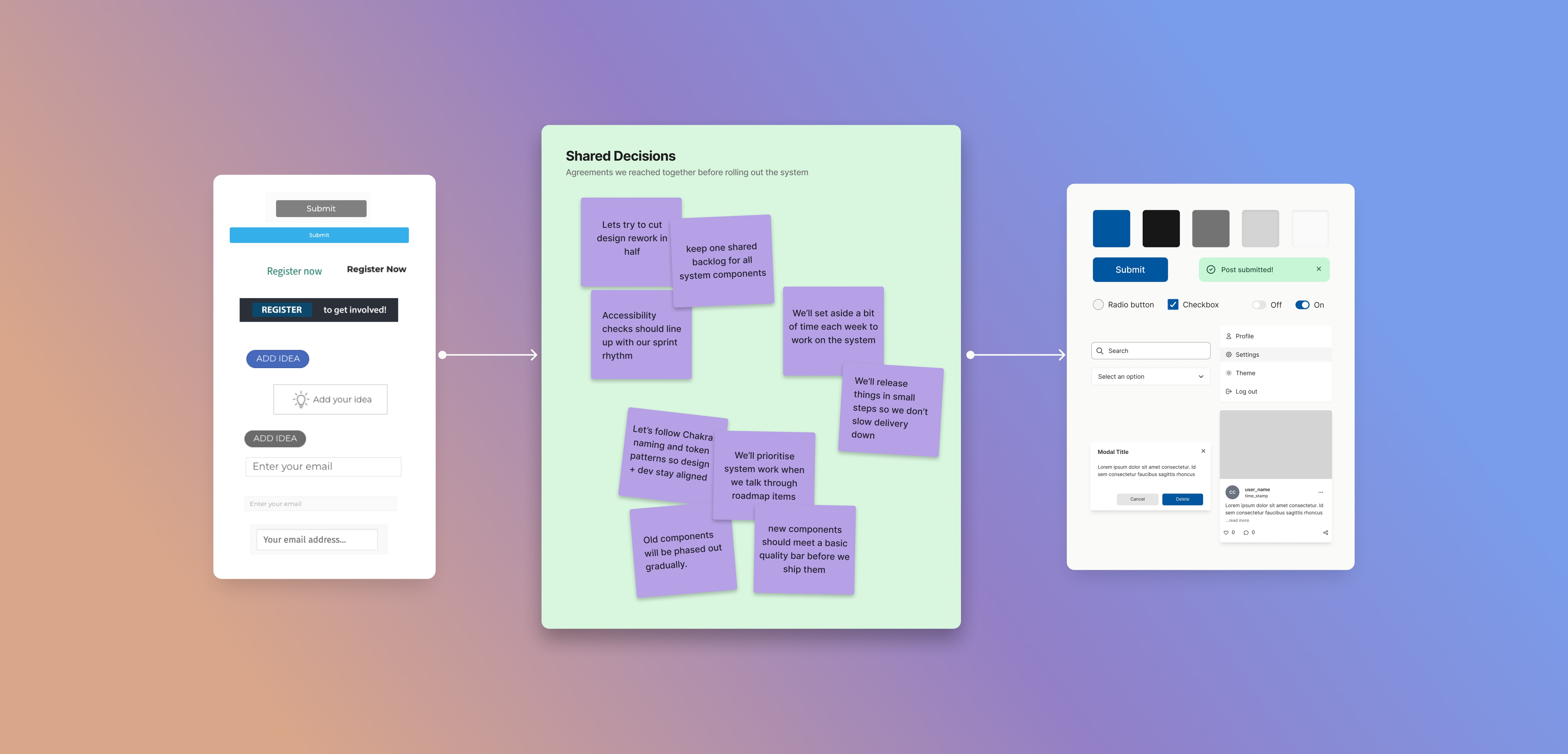
This process transformed a fragmented toolkit into a coherent, scalable system. With teams unified and the structure in place, we could now focus on designing components that worked harder, delivered faster, and supported the entire product suite.
Diagnosing the problem
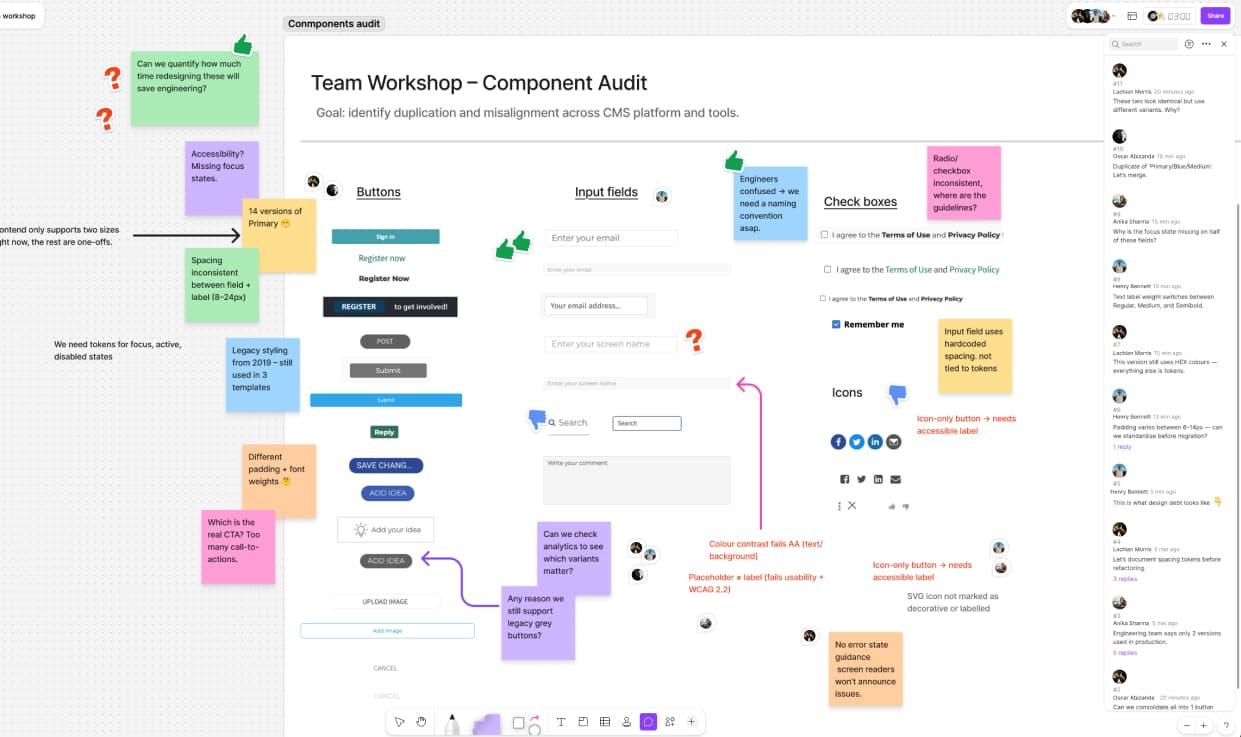
I began with a full audit of every CMS tool, mapping components across the product suite. What I found confirmed the suspicion: more than a dozen versions of the same button, inconsistent spacing rules, and ad-hoc decisions that had multiplied over time.
This wasn’t about fixing inconsistent components; it was about changing how we worked.
Building alignment
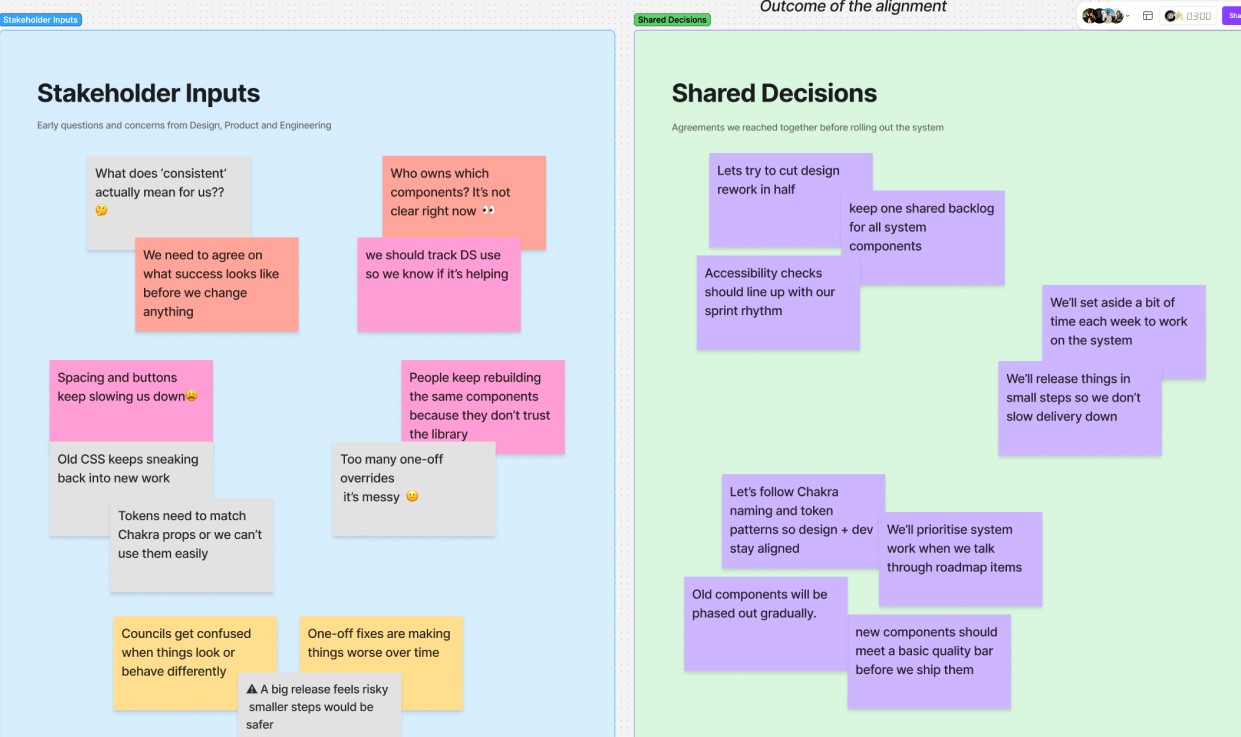
I met with the Head of Product, the Engineering Manager and the Head of Design to agree on what success meant from a business point of view. We focused on outcomes that mattered: faster delivery, lower maintenance and consistent compliance. Together, we set a few simple goals — halve design rework, align accessibility reviews with sprint cadence, and create a shared backlog for system components.
To keep product delivery moving, I carved out protected focus time for system work each week. Instead of a big-bang release, we rolled the system out incrementally, proving its value in small steps.
Structuring the system
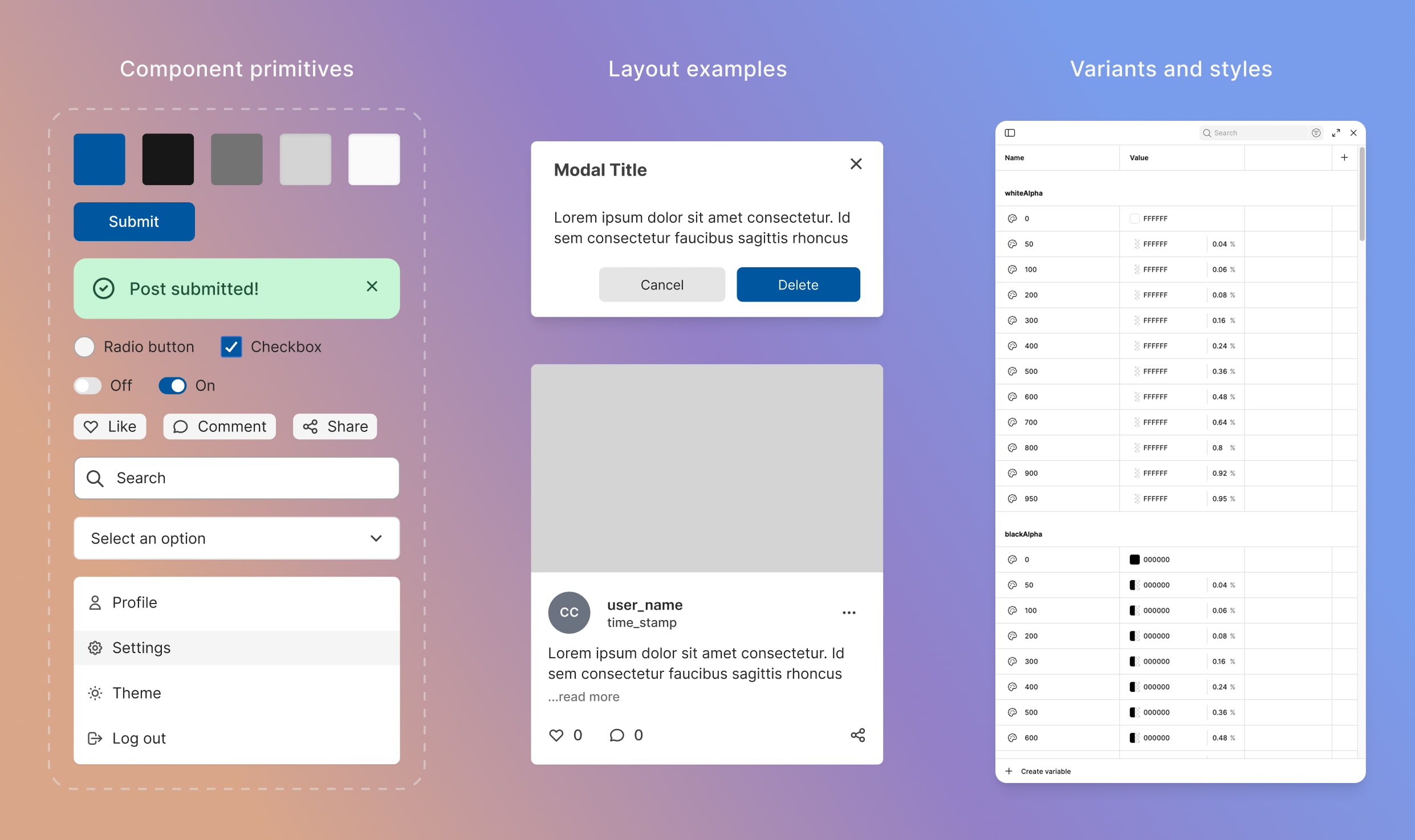
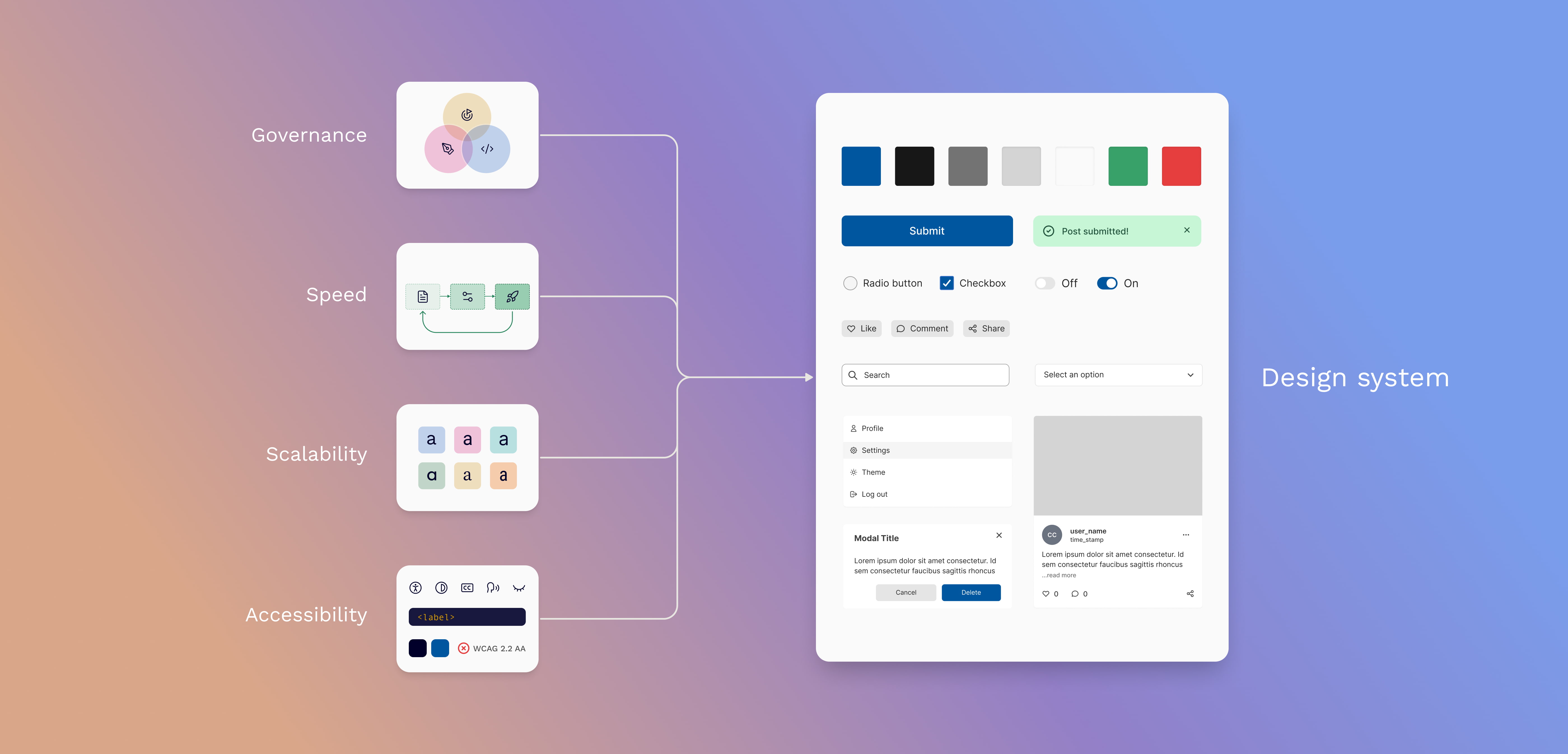
The structure followed atomic design principles, mapped directly to Chakra UI so designers and developers could finally speak the same language. Naming conventions matched props and logic in code. Every component included accessibility metadata, usage guidance and version control.
Each component had a straightforward lifecycle from first use to retirement. Updates felt organic, not disruptive, and the system evolved at the same pace as the product.
The team started to feel the difference pretty quickly. Things ran smoother, discussions stopped bouncing back and forth, and the daily work finally felt manageable again.
“
It elevated design’s position internally, bringing the team more credibility and agency
Head of Design
“
Delivery was faster and friction simply faded away.
Product Manager
Delivery
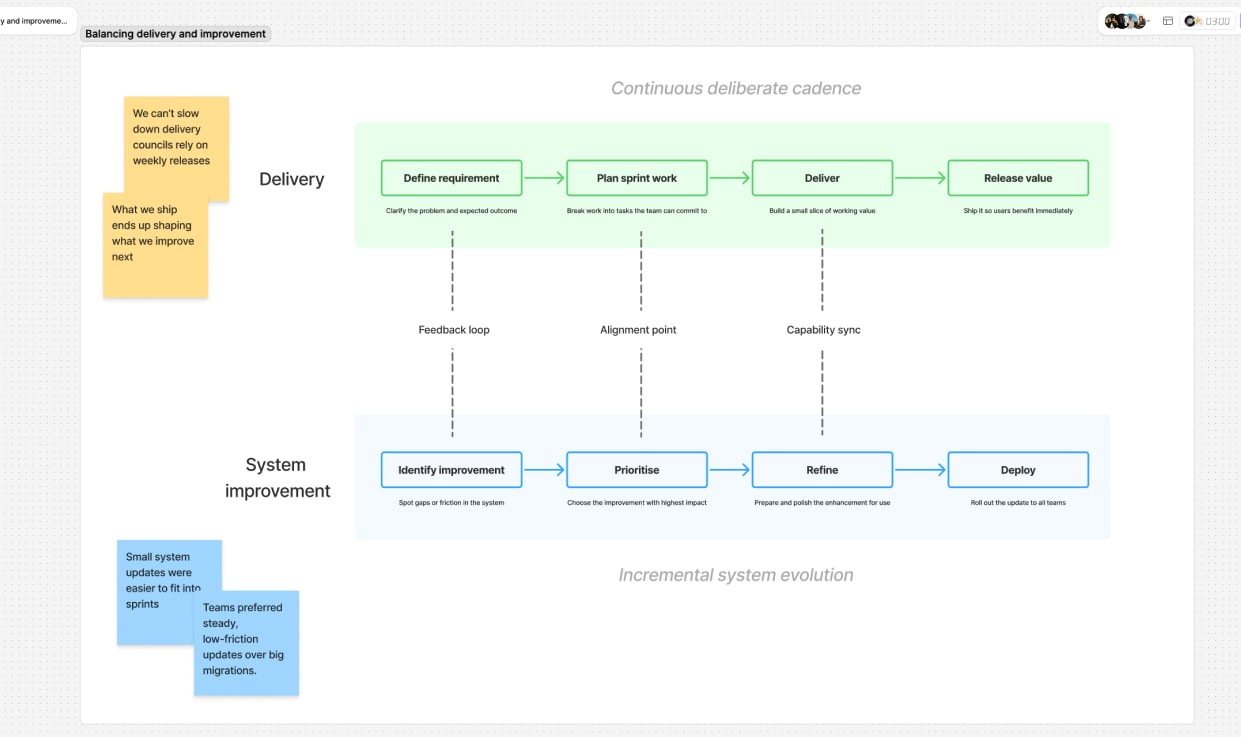
Delivery couldn’t stop just because we were improving the system, so I designed an approach that kept both streams moving together.
Feature work continued at its usual pace, while system improvements shipped in small, safe increments alongside it.
Regular sync points kept everything aligned without slowing teams down.
This let us steadily raise quality while still meeting sprint goals.
Collaborative governance
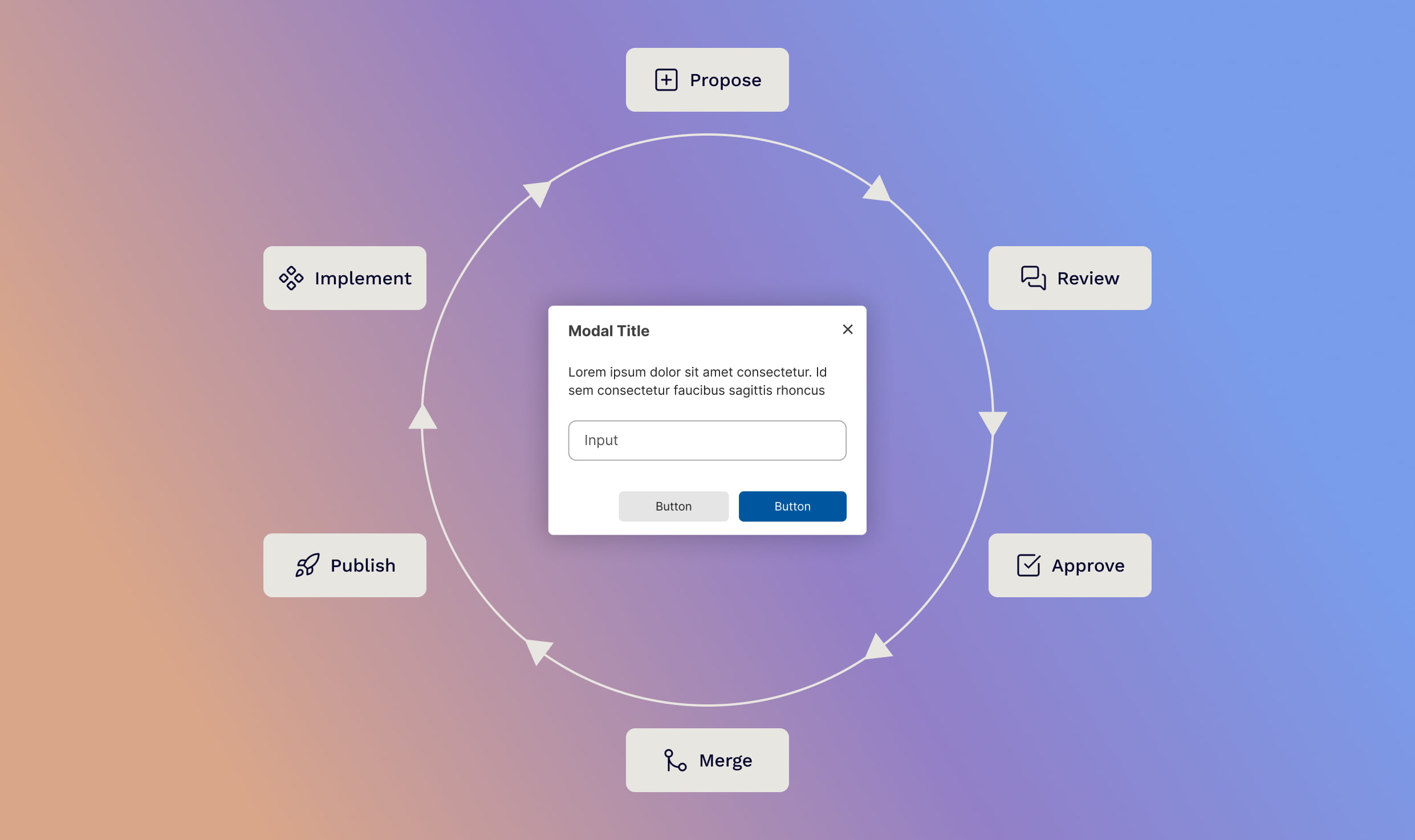
Governance brought clarity without getting in the way of delivery.
Clear contribution rules stopped duplicate components and cut down on wasted design time.
Async reviews replaced hand-off meetings, so decisions happened faster and with far less friction.
Balancing delivery and improvement
We couldn’t stop building features, so I built the system into our everyday delivery rhythm. New features shipped with standardised components. I recorded any changes in the backlog and merged updates at the end of each sprint.
This approach kept delivery speed high while gradually bringing every product into alignment.
Cross-brand scalability
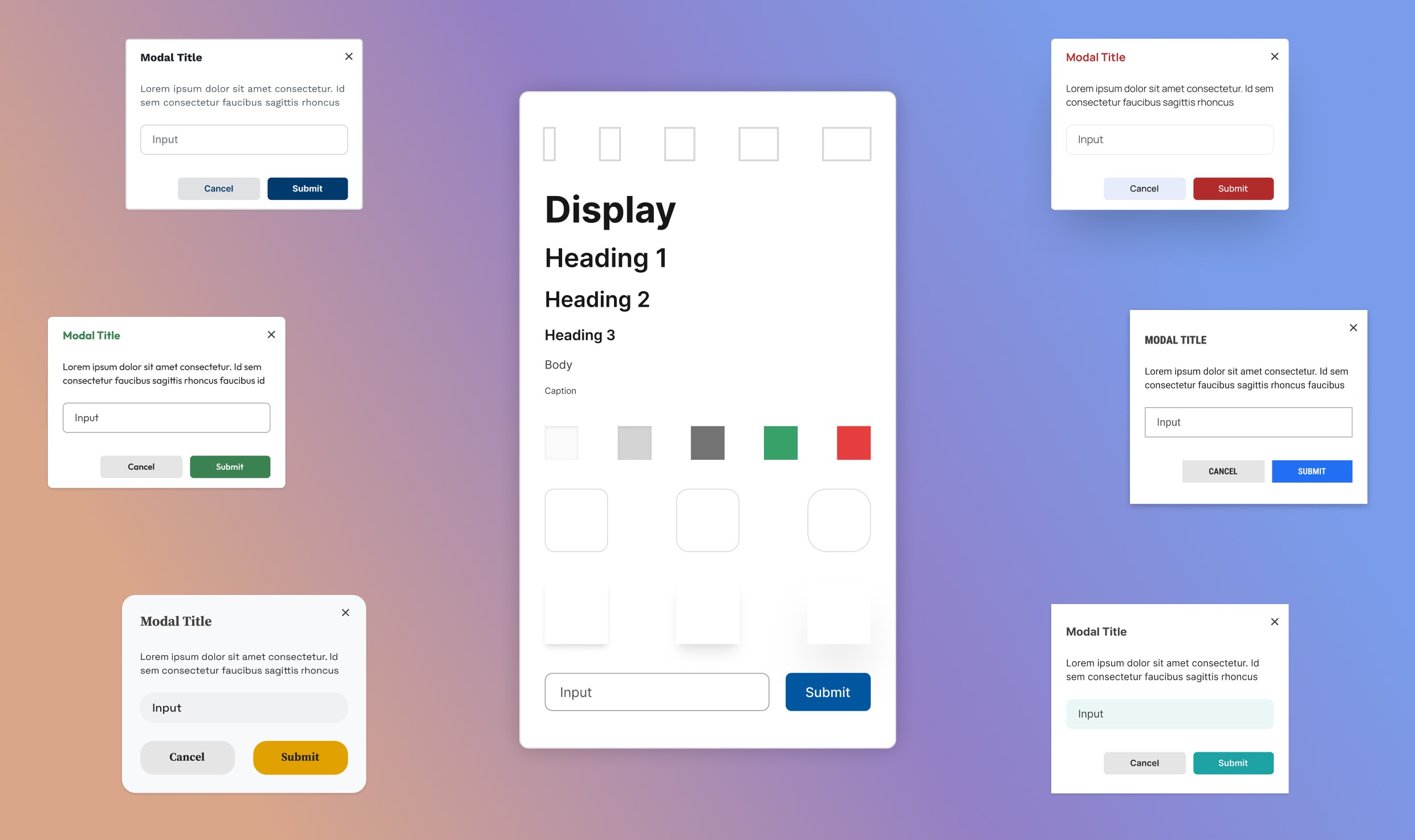
Each council still needed its own visual identity. I introduced a theming framework that allowed variation in colour and typography without fragmenting the core system. It gave each brand flexibility while keeping the foundation solid and maintainable.
Accessibility as a shared habit
Accessibility was built into the workflow rather than bolted on at the end. Contrast checks, focus states and ARIA patterns became part of the pipeline. Over time, it became part of everyday practice, not an afterthought.
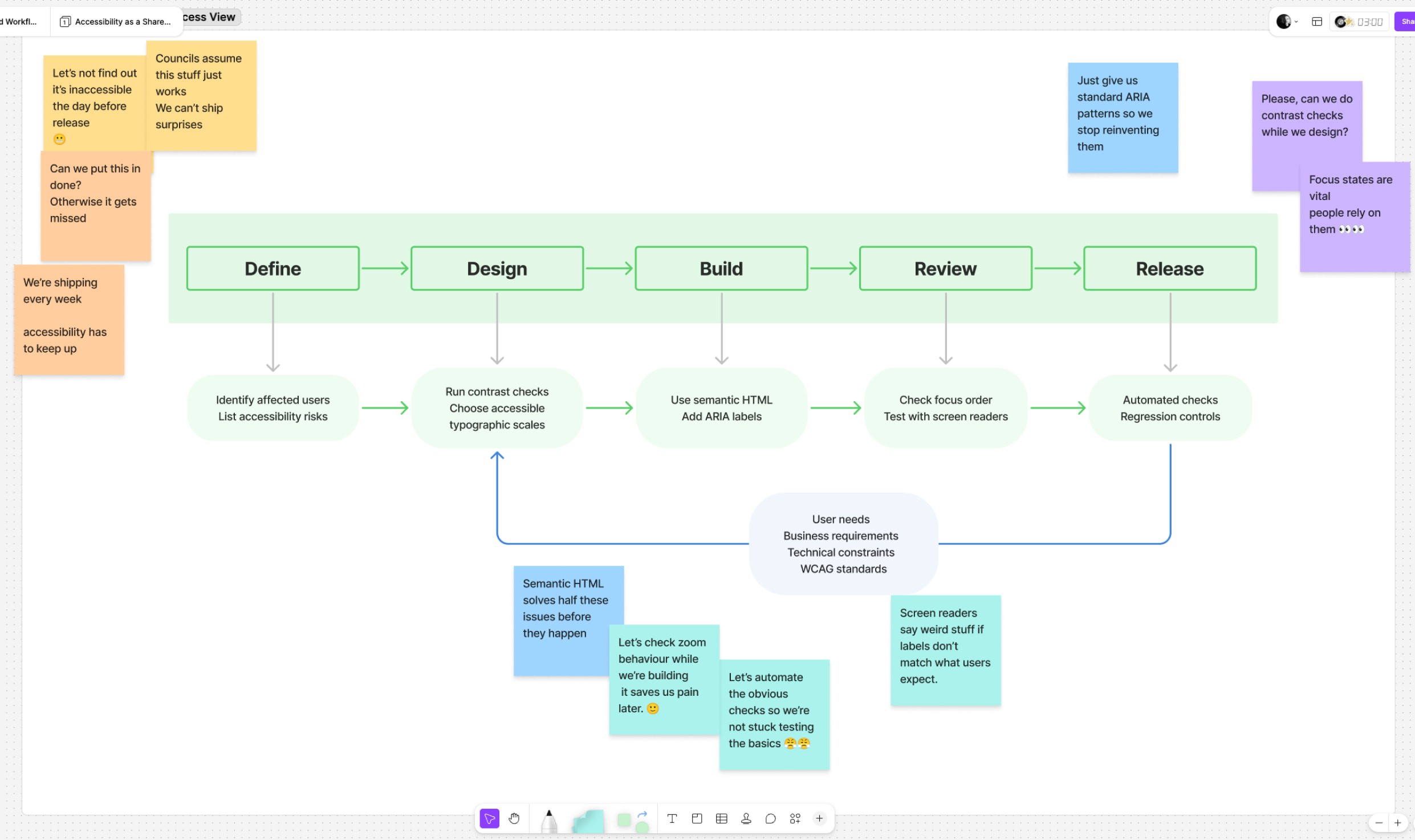
Predictability improved across the board. Estimates stabilised, sprint reviews became about progress instead of cleanup, and rework finally started to fall away.
“
It was the first time our system felt alive, like everything was finally pulling together
Front-End Engineer
“
Delivery was smoother and friction simply faded away.
Product Manager
The ripple effect reached residents and administrators too: smoother interactions, fewer bugs and familiar patterns across tools. But the real win was internal: a faster, calmer, more reliable delivery culture.
Outcomes
The shift was immediate.
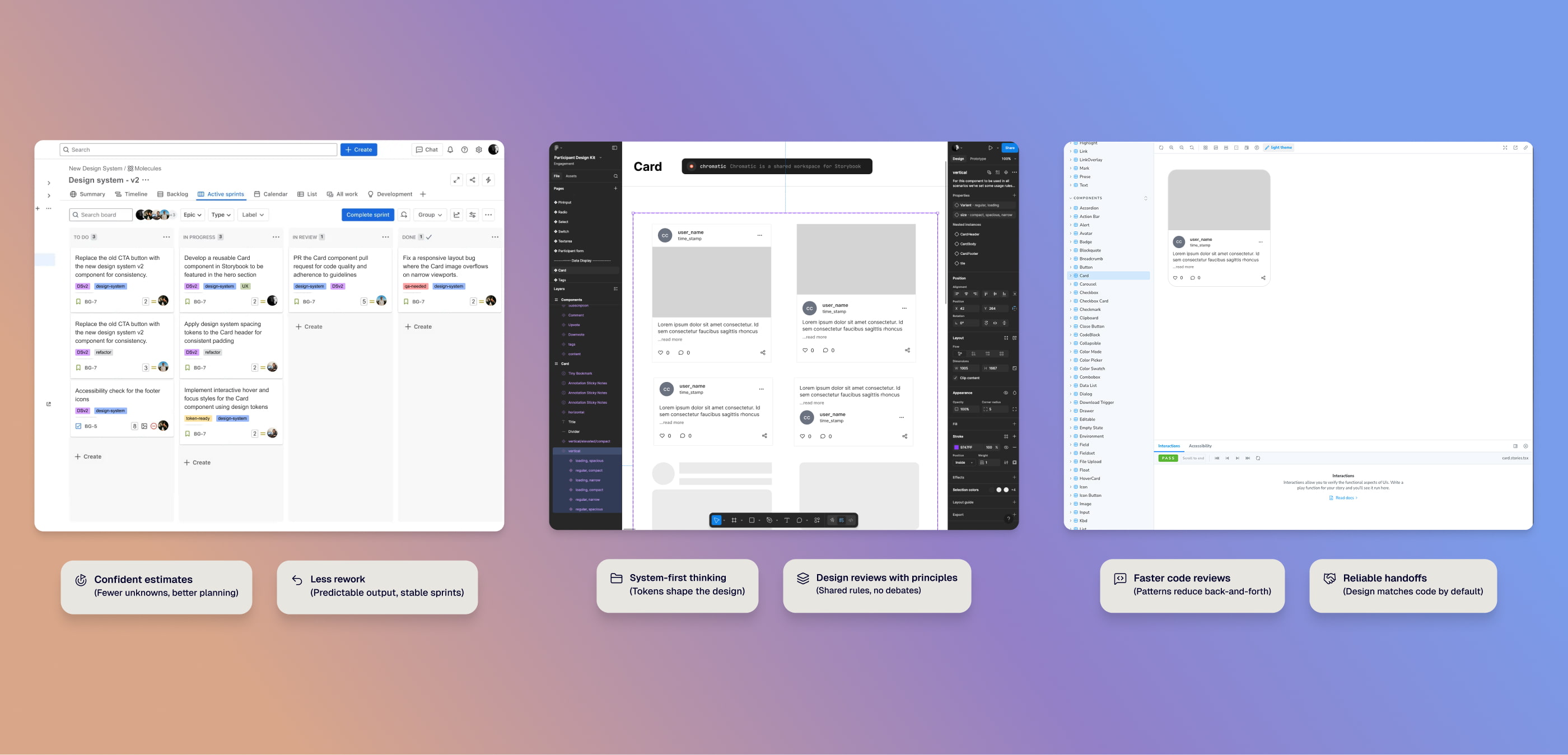
Design reviews focused on principles instead of personal taste.
Code reviews moved faster because everyone knew how components behaved.
PMs estimated with confidence, and engineers stopped wasting time chasing inconsistencies.
Predictability improved across the board. Estimates stabilised, sprint reviews became about progress instead of cleanup, and rework finally started to fall away.
“
It finally felt easy, the kind of consistency we used to chase just started happening.
CX Team Lead
“
Predictability changed everything. We could finally focus on new ideas.
Product Manager
The ripple effect reached residents and administrators too: smoother interactions, fewer bugs and familiar patterns across tools. But the real win was internal: a faster, calmer, more reliable delivery culture.
Future
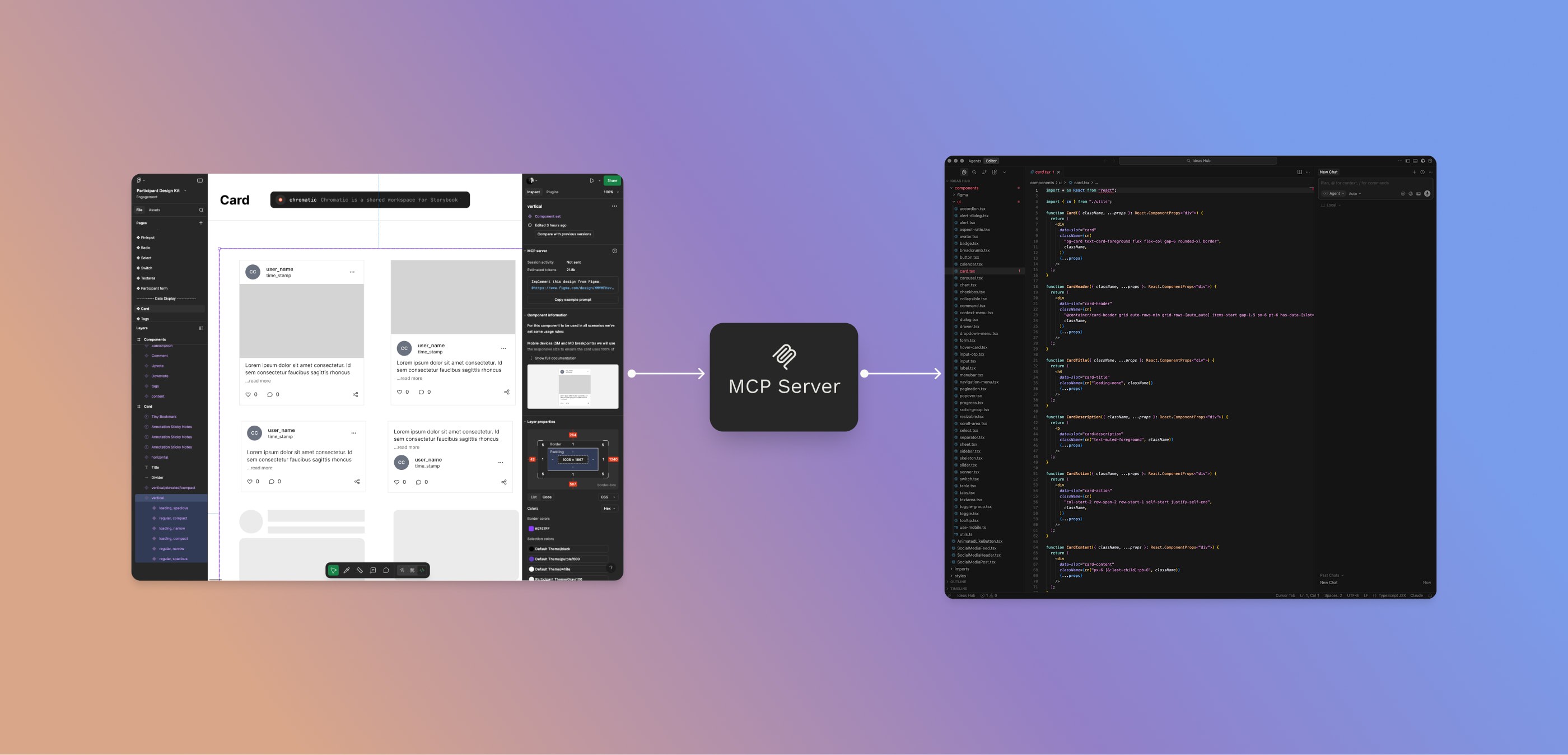
As AI design and development tools evolve, predictable component semantics and structured documentation will matter more than ever. Because every pattern now follows consistent logic, the organisation is already set up for AI-assisted prototyping and code generation.
Reflection
Looking back, I’d start governance earlier; it’s easier to guide habits than to change them later. I’d also put analytics in place sooner to track adoption and see which components delivered the most value.
Key lessons
A design system only works if it drives measurable outcomes for the business.
Governance should enable people, not slow them down.
Design earns influence when it improves how the organisation delivers.
“
The system gave us structure without slowing us down. Collaboration finally felt easy.
Head of Design
“
Less guessing, more momentum. We could finally build with confidence.
Front-End Engineer
“
Design started shaping how we worked, not just how things looked.
Head of Product
It was about helping the company work smarter and move faster, proof that a good design system doesn’t just shape products, it shapes how people work together.
Check out my other projects
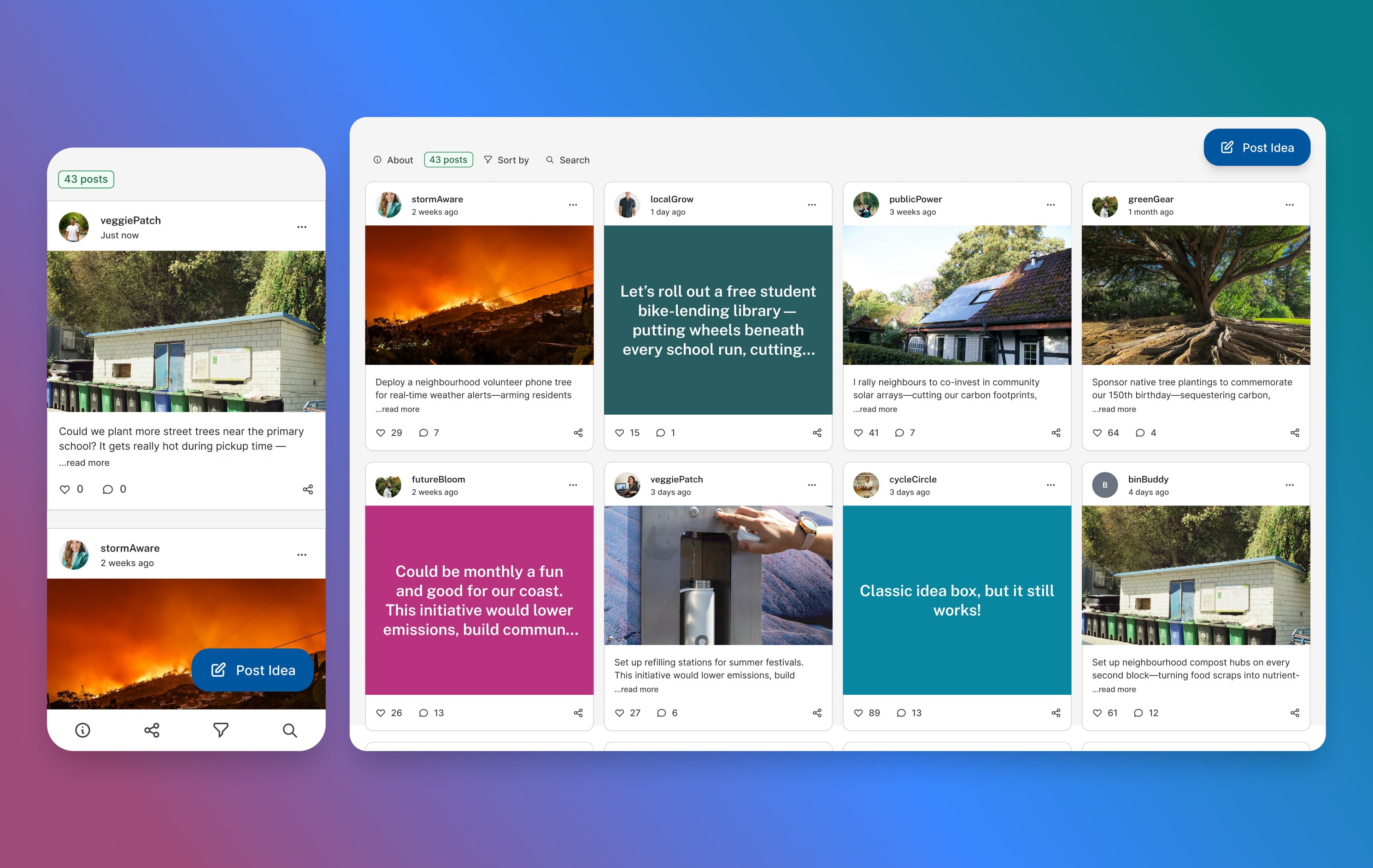
Rebuilding a tool councils had quietly stopped using
Doubled participation and increased tool adoption by 64%
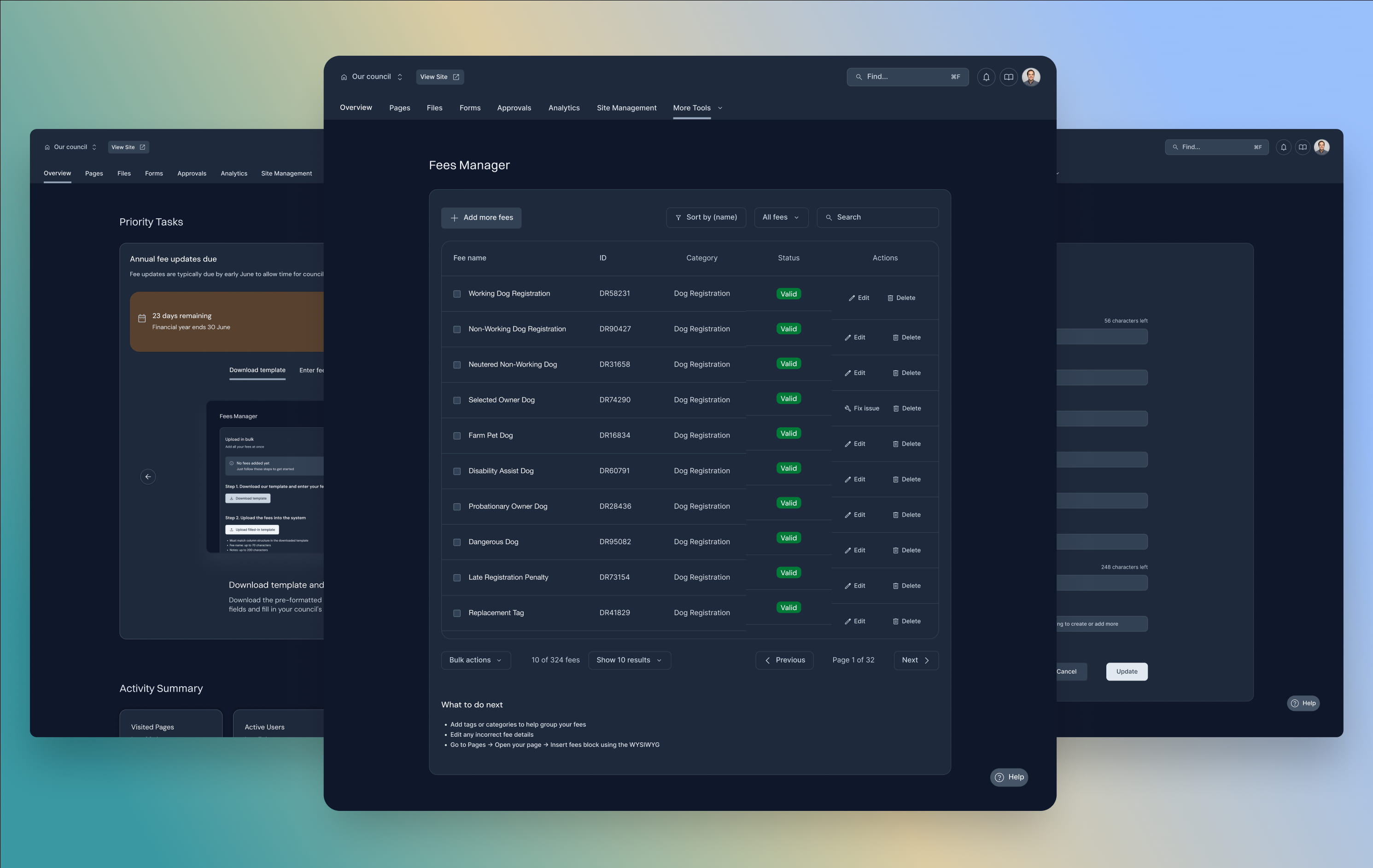
From a three-day ordeal to a two-hour process
Cut fee update time in half and reduced errors by 75%